Search for Trees
View Trees By Category
- All Trees
- Trees by Attributes
- Trees by Genus
- Acer - Maple
- Aesculus – Buckeye
- Alnus – Alder
- Amelanchier – Serviceberry
- Asimina - Pawpaw
- Betula – Birch
- Carpinus – Hornbeam
- Carya - Pecan & Hickory
- Catalpa
- Celtis – Hackberry
- Cercis – Redbud
- Cladrastis – Yellowwood
- Cornus – Dogwood
- Corylus – Flibert
- Crataegus – Hawthorn
- Fagus – Beech
- Ginkgo
- Gleditsia – Honeylocust
- Gymnocladus – Kentucky Coffee Tree
- Hamamelis – Witchhazel
- Hydrangea
- Liquidambar – Sweetgum
- Liriodendron – Tulip Tree
- Maackia
- Maclura – Osage Orange
- Magnolia
- Malus – Crabapple
- Metasequoia – Dawn Redwood
- Nyssa – Black Tupelo
- Ostrya – Hophornbeam
- Picea – Spruce
- Pinus – Pine
- Platanus – London Planetree
- Populus – Aspen
- Prunus – Cherry
- Quercus – Oak
- Robinia – Black Locust
- Salix – Willow
- Sassafras
- Syringa – Lilac
- Taxodium – Bald Cypress
- Thuja – Arborvitae
- Tilia – Linden
- Ulmus – Elm
- Zelkova
Shagbark Hickory
Carya ovata
Height: 75’
Spread: 55’
Shape: Oval
Growth Rate: Slow
Foliage: Green
Fall Color: Yellow-Brown
Flower: Insignificant
Fruit: Showy Edible Nut
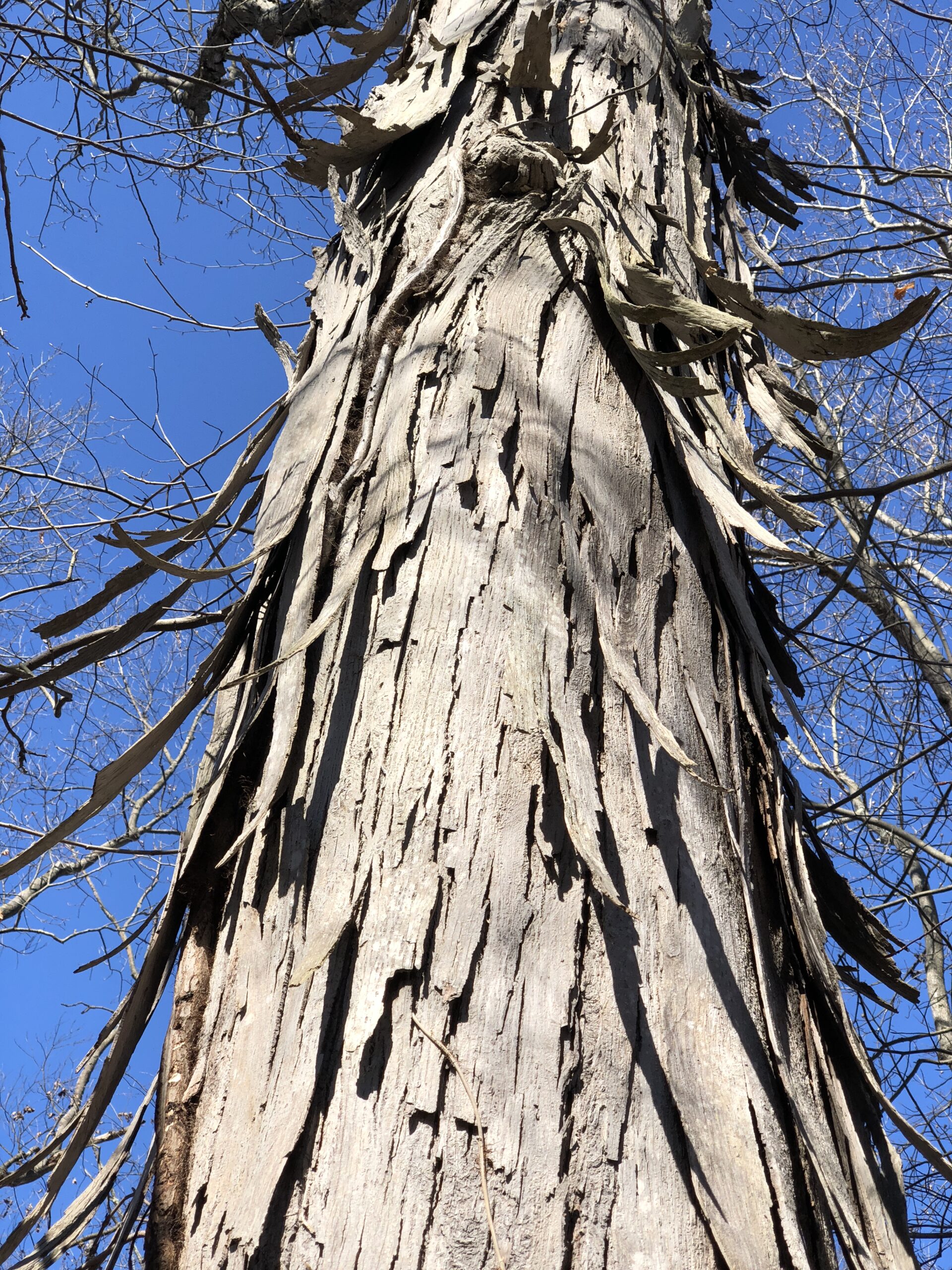
Distinctive Features: Ornamental bark with edible nuts
Carya ovata, or Shagbark Hickory, is a majestic deciduous tree known for its distinctive peeling bark and delicious, edible nuts. With its towering form, golden-yellow fall foliage, and wildlife-friendly qualities, it adds beauty and ecological value to any landscape.
Photo Credit: NC State Extension