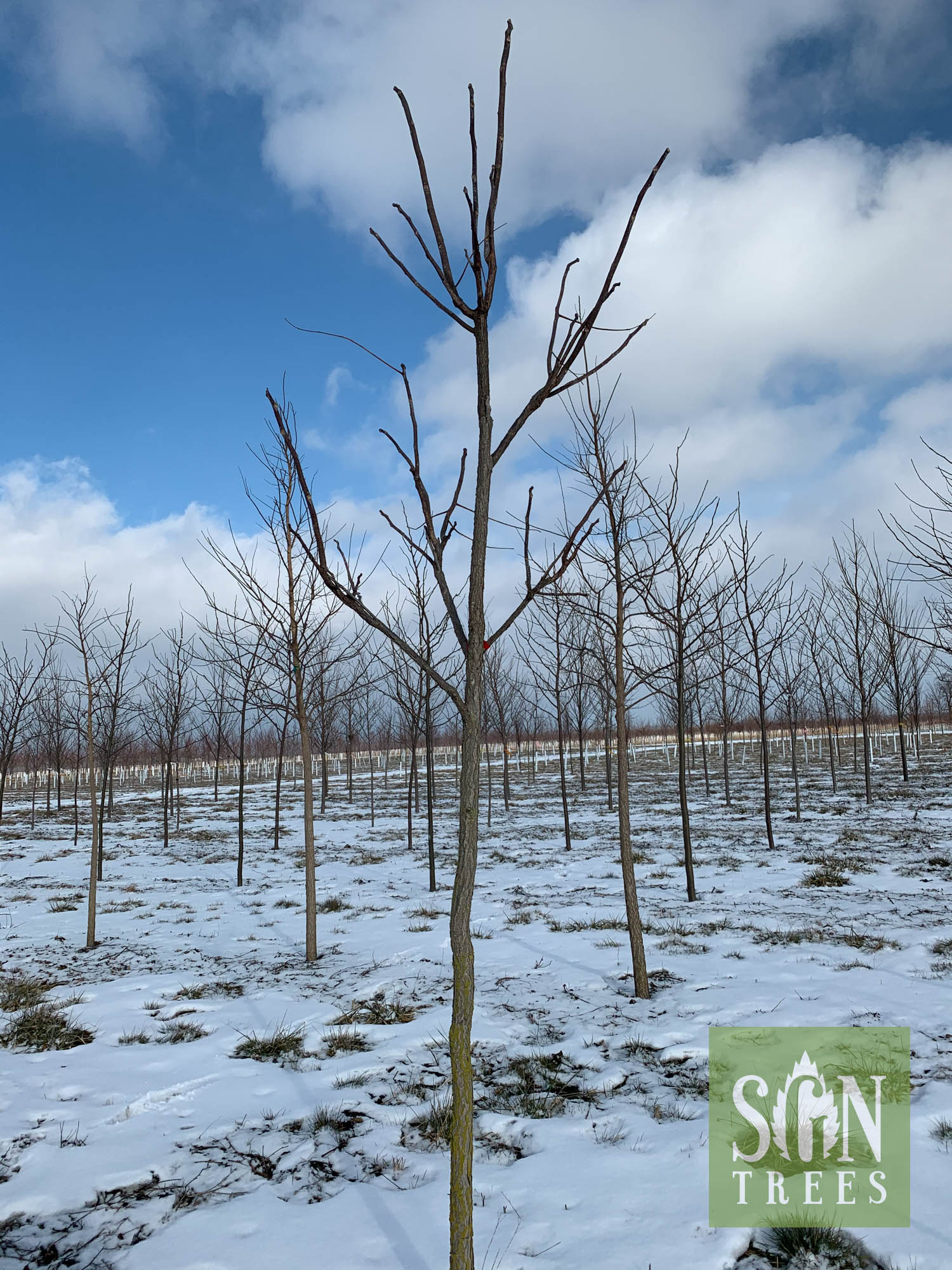
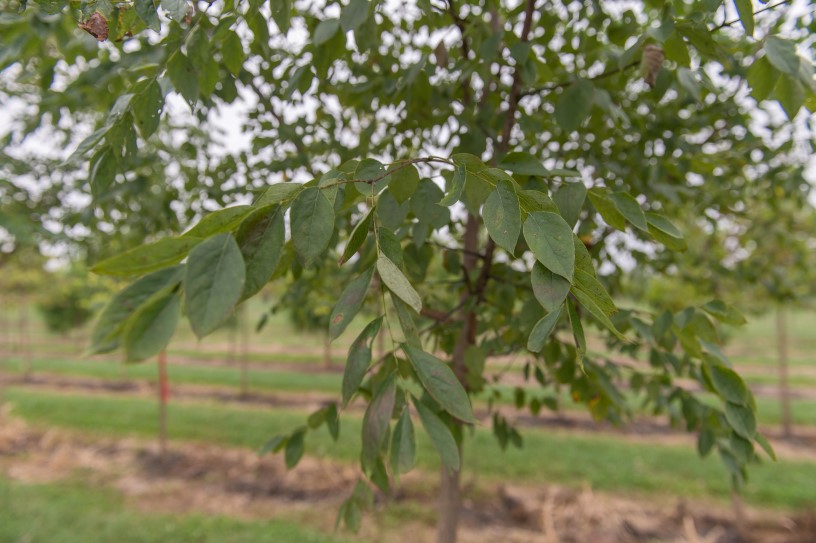
Midwest native Gymnocladus diocus, or Kentucky Coffee Tree, is a powerhouse shade and street tree grown here at the nursery. This striking species adds architectural structure and broad shade to landscapes and it’s upright habit makes it perfect for urban environments and expansive spaces. With it’s bold branching and golden fall color, this tree provides year-round interest and supports local wildlife.
Here on the farm we grow the straight species, as well as three seedless cultivars: Espresso, Skinny Latte, and True North Kentucky Coffee Tree. Each variety brings it’s own unique characteristics to the landscape.
Espresso Kentucky Coffee Tree, Gymnocladus dioicus ‘Espresso-JFS’, has large double compound leaves and adds a tropical feel to the landscape. This tree is tolerant of all conditions and is a seedless variety. Espresso Kentucky Coffeetree is one of our “Tried & True” favorites to grow on the farm!
True North Kentucky Coffee Tree, Gymnocladus dioicus ‘UMN-Synergy’, is a tough, adaptable Kentucky Coffee Tree cultivar with superior branch structure developed at University of Minnesota. The foliage adds dappled shade in the summer and turns bright yellow in the fall. The coarse bark stands out in the winter landscape.
Skinny Latte Kentucky Coffee Tree, Gymnocladus dioicus ‘Morton’, is nearly columnar. This new & stately Kentucky Coffee Tree selection was discovered at the Morton Arboretum and introduced through the Chicagoland Grows program. The seedless and narrow features of this cultivar make it worthy of consideration in the landscape!
For the straight species enthusiasts, the native Kentucky Coffee Tree seed pods can actually be used for culinary purposes! Check out this fascinating blog post from the Forager Chef in which he outlines some of the different ways the seed pods have been used by indigenous cultures and curious humans over the years. He discusses that it’s actually quite hard and labor intensive to make “coffee” from the mature pods, but he instead was interested in the unripe green/yellow pods and cooking the seeds like beans, and marinating them in oil similar to olives! Here are some other culinary uses he recommends:
- “Eat like edamame. Score the inner shells before boiling, cook until the beans are tender, then shuck them at the table warm and eat with good salt. I recommend you try this first before you do anything else.
- Cook the beans and allow them to sit in a light brine, as for lupin beans, then enjoy as a snack as you would with antipasti, or tapas.
- Try an Italian classic: fresh favas are eaten, shell and all, with chunks of pecorino cheese and a glass of white wine.
- After cooking per my intro method below, the beans can be shelled and used anywhere you would use fava beans.
- Marinate the beans in aromatic oil after cooking (method in the recipe notes below).
- Brine the beans as described and marinate in aromatic oil, mixing them with your favorite olives.”
Whether you enjoy this tree for it’s potential culinary uses, or simply love basking under it’s shade, Kentucky Coffee Tree is a unique Midwest native that we love growing here at the nursery! And, if you’d like to come tag some for your Fall or Spring parkway planting projects, just let us know – we have a great selection growing in our fields! Check out some more pictures below: